
How Many Hours A Day Should You Wear Invisalign®?
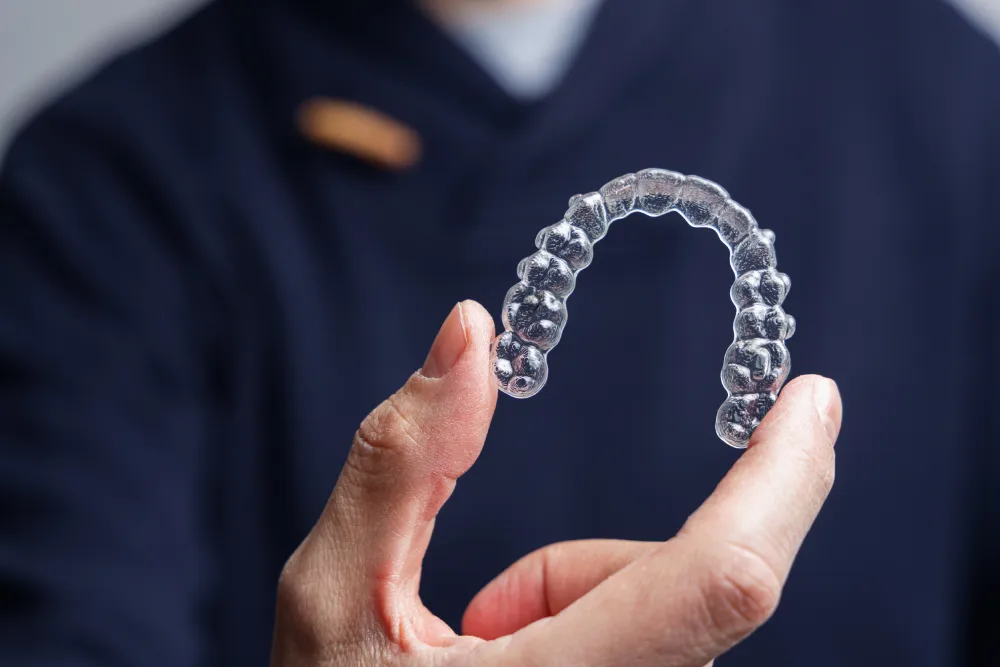
You should wear your Invisalign® aligners for 20 to 22 hours a day. That leaves you two to four hours for meals, drinks, and brushing. When you begin your Invisalign treatment at Circ Dental in Wigan, we’ll give you detailed advice on how long to wear and how to take care of your Invisalign aligners so that your teeth can move safely and efficiently.
Why Invisalign aligners should be worn for 20-22 hours a day
Invisalign aligners work by exerting continuous, but gentle pressure on your teeth to get them to move to the right places, through a process called bone remodelling. While this might sound dramatic, bone remodelling is a natural process which takes place within the body throughout your life, and is influenced by physical activity and pressure, among other factors such as nutrition. Your teeth sit in tissue known as the periodontal ligament, and when you wear Invisalign aligners, over time the pressure they put on this ligament will trigger a bone remodelling cycle.
Each Invisalign tray is designed to apply a tiny amount of pressure. Over time, this will lead to the bone in front of the tooth (towards where you would like the tooth to move) being removed by cells known as osteoclasts. In the area behind your tooth, new bone is built up by cells called osteoblasts.
If you regularly wear them for less than 20 hours a day, the pressure isn’t there long enough, the ligament can begin to relax, and your teeth may start drifting back. Eventually, your teeth may stop fitting your aligners.
What happens if you wear your Invisalign aligners longer than 22 hours a day?
Wearing your aligners for longer than 22 hours won’t harm your treatment. The 20 to 22 hours we recommend isn’t a ceiling. Treat 22 hours as your goal and 20 as your minimum, so a long lunch or a late dinner doesn’t push you under.
The two to four hours you have without your aligners are there for you to eat, drink and clean your teeth properly. Rushing your meals or cutting corners on brushing just to squeeze in extra wear time isn’t worth it. A clean mouth matters just as much as the hours.
Can I eat and drink with Invisalign?
Do not eat when wearing your aligners, or drink anything other than water. This is because the process of chewing food can warp or crack your aligners through the pressure they exert. Similarly, drinking hot liquids can also distort your aligners, as well as causing staining and altering the appearance of the delicate plastic.
Eating or drinking while wearing aligners can also create an ‘acid bath’ effect, where bacteria, trapped sugar and acid can build up under your aligners, potentially leading to cavities, inflammation of your gums and white spots. Without saliva to provide a cleaning effect after eating and drinking, food debris and bacteria can slip under your aligners and may be less easy to remove.
What happens if I forget to wear my aligners?
Forgetting to put your aligners in for a few hours is not usually a problem, but for Invisalign to work you do need to wear them consistently. If remembering to wear your aligners is likely to be a problem for you, we can usually provide an alternative at our practice in Wigan, such as fixed braces.
What happens when you don’t put aligners in on time?
| Time without aligners | What you might notice | What to do |
| A few hours | Your aligner may feel a little tighter than usual when it goes back in. A one-off is unlikely to set you back. | Put it back in as soon as you can. |
| Around half a day | The aligner may feel noticeably tight, with some soreness for a day or so. Progress on that aligner may slow. | Put it back in, and don’t force it if it won’t seat with gentle pressure. |
| A full day or more | Your teeth may begin to move back towards their old position, and the aligner may not sit fully over them. | Call us on 01257 733 633 for advice. |
| Several days or more | The aligner may no longer fit. You may need to go back to an earlier aligner, or have a new scan. | Book an appointment so we can check your progress. |
If you’re ever unsure, get in touch. A quick call is always better than guessing.
What should I do if I put my aligners back in late?
If you’ve forgotten to wear your Invisalign aligners, it’s important to put them back in as soon as possible so that you do not slow down or even reverse the progress you’ve already made.
Forgetting them for a few hours should not be a long-lasting problem, as long as this does not happen regularly. However, if you do not put them back for half a day or longer, this can cause a setback, and some patients may experience a tighter fit and soreness while trying to put the aligners back in.
-
Do not force the tray
If your aligners feel unusually tight, do not force them onto your teeth as this can distort the aligner or put unnecessary strain on your teeth.
-
Do not skip ahead
It might be tempting to move to the next aligner tray early to save time, but in order to keep your progress on track and prevent discomfort, we do not suggest you do this without contacting our Wigan practice first.
-
Contact us as soon as possible
If you’ve left your aligners out a day or longer, you may need to move back to a previous Invisalign set; we strongly advise you to make an appointment to discuss this. If it has been a day or longer, you may need to have another 3D scan so that we can assess how much you need to redo and whether you need a new, adjusted programme of aligners.
How long should I wear each set of Invisalign aligners?
When you come in to have Invisalign treatment with us at Circ Dental, Wigan, we’ll typically suggest that you wear each clear aligner set for 1 to 2 weeks, taking them out only to eat and drink, and brush and floss your teeth. Depending on your treatment plan, we may recommend that you switch different trays after different lengths of time. Unless your dentist or orthodontist advises you to, never switch aligners early, as they might fit poorly, cause discomfort or create other issues which delay your progress.
How long can I expect to wear Invisalign aligners in total?
Most people wear Invisalign aligners for around 12 to 18 months in total, although depending on your specific needs, you may have to wear them for a longer or shorter time.
| Type of Invisalign treatment | Length of time |
| Mild cases | Up to 6 months |
| Moderate cases | 6-12 months (can be up to 18 months) |
| Complicated cases | 12-24 months |
| Retainers |
|
Staying on track with your Invisalign treatment
It’s important to wear your Invisalign aligners between 20-22 hours per day. If you wear them consistently for most of the day, your aligners can exert pressure on your ligaments and jawbone, gradually moving your teeth into the positions you want them and giving you a straighter, more confident smile.
If you forget to put your aligners in or lose them, come to see us as soon as possible so that we can check your progress and assess the risk. Whilst wearing your Invisalign aligners consistently is key, leaving them out for a few hours does not generally cause serious issues as long as you remember to put them back in as soon as possible.
At Circ Dental in Standish, Wigan, we have helped hundreds of patients achieve straighter smiles with Invisalign. If you’d like to straighten your teeth, please get in touch so we can help you decide on a treatment plan that’s right for you.
Book your Invisalign consultation at Circ Dental, Wigan
Frequently asked questions
We have a range of Invisalign treatment options starting from £2,800. At Circ Dental, 0% finance is available, so you can spread the cost of your Invisalign treatment into monthly payments. You can view more information on our fees and finance page.
Book a consultation with the Circ Dental team
Get personal guidance on treatment options, dental concerns, and the next best step for your smile.

